How HRMS Software Supports HR Teams from Employee Joining to Exit
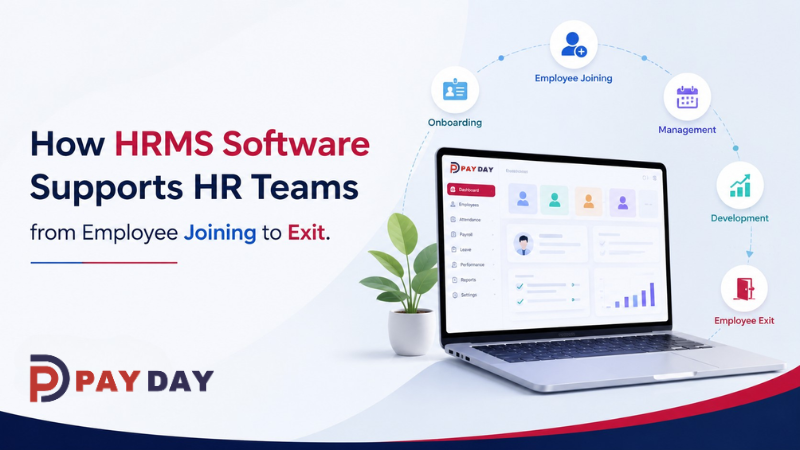
Managing employees is a continuous process that begins before an employee joins the organization and continues until their final day.
HR teams manage recruitment, onboarding, employee records, attendance, leave, payroll, documents, and offboarding. When these activities are handled manually or across multiple disconnected systems, HR teams may spend significant time maintaining records and coordinating processes.
This is where HRMS software can help.
An integrated Human Resource Management System connects different HR processes and provides a centralized environment for managing the employee lifecycle.
What Is Employee Lifecycle Management?
Employee lifecycle management refers to the different stages an employee goes through within an organization.
A typical employee lifecycle includes:
Recruitment → Onboarding → Employee Management → Attendance → Leave → Payroll → Documentation → Offboarding
Each stage generates employee information that may be required later.
For example, employee details collected during onboarding can become part of the employee's permanent record, while attendance and leave information may contribute to payroll processing.
An HRMS helps connect these processes instead of managing them as separate activities.
1. Recruitment Starts the Employee Journey
The employee lifecycle begins with recruitment.
HR teams may need to manage:
- Candidate information
- Job requirements
- Recruitment activities
- Selection details
- Joining information
When recruitment and employee management are completely separate, HR teams may need to enter the same information again after selection.
A connected HRMS can help create a smoother transition from recruitment to onboarding.
PAYDAY
PAYDAY includes Recruitment Management, helping businesses manage recruitment activities as part of their wider HR environment.
2. Onboarding Creates a Structured Joining Process
After selection, employees need to complete the joining process.
HR teams may collect:
- Personal details
- Contact information
- Identification documents
- Educational information
- Employment details
- Joining documents
Manual onboarding can involve emails, forms, spreadsheets, and multiple document exchanges.
PAYDAY's Self-Onboarding functionality allows employees to provide relevant information and documents digitally.
This can reduce repetitive data entry and give HR teams a more organized onboarding process.
3. Employee Management Keeps Records Organized
Once an employee joins, HR teams need to maintain their information throughout their employment.
Employee records may include:
- Personal information
- Department
- Designation
- Joining date
- Employee documents
- Attendance
- Leave
- Salary information
- HR letters
A centralized Employee Management Software system helps HR teams maintain this information in one place.
PAYDAY's Employee Management capabilities support centralized employee records throughout the employee lifecycle.
4. Attendance Management Tracks Employee Working Information
Attendance is an important part of day-to-day employee management.
HR teams may need to monitor:
- Present and absent days
- Working hours
- Late arrivals
- Early departures
- Shifts
- Overtime
Attendance information can also be connected with leave and payroll processes.
PAYDAY's Attendance Management module helps organizations digitally manage employee attendance and related information.
For organizations operating across locations, PAYDAY also provides GIS Tracking and Multi-Location Mapping capabilities where applicable.
5. Leave Management Connects Time-Off with Attendance
Employees regularly need approved time away from work.
HR teams may manage:
- Leave applications
- Leave approvals
- Leave balances
- Half-day leave
- Paid and unpaid leave
- Leave records
Managing leave separately from attendance can create additional reconciliation work.
PAYDAY's Leave Management module supports leave applications, approvals, and leave records.
The workflow can connect:
Leave Request → Approval → Leave Record → Attendance → Payroll
6. Payroll Uses Relevant Employee Information
Payroll is another important stage of employee management.
Salary processing may involve:
- Basic salary
- Allowances
- Deductions
- Attendance
- Leave
- Overtime
- Arrears
- Bonuses
When attendance, leave, employee records, and payroll are maintained separately, HR teams may need to manually transfer information.
PAYDAY's Payroll Management capabilities support salary groups, allowances, deductions, arrears, bonuses, reports, and other payroll processes.
Connecting payroll with employee information can help create a more organized salary-processing workflow.
7. Employee Letters and Documents
HR teams regularly create and maintain employee-related documents.
These can include:
- Appointment letters
- Employment letters
- Salary-related letters
- Experience letters
- Other HR communications
Managing these documents manually can make it difficult to maintain consistent records.
PAYDAY's Letter Management functionality helps organizations manage employee-related letters within their HR environment.
8. Reports Give HR Teams Better Visibility
As organizations grow, HR teams need reports to understand their workforce.
Reports can provide information about:
- Employees
- Attendance
- Leave
- Payroll
- Departments
- Workforce trends
- Other HR activities
Instead of manually combining information from multiple spreadsheets, HRMS reporting can provide a more centralized view.
PAYDAY provides reporting capabilities across HR and payroll processes to support workforce management and decision-making.
9. Multi-Location Employee Management
Managing employees becomes more complex when a business operates across multiple offices, branches, or locations.
HR teams may need to manage:
- Employees
- Attendance
- Shifts
- Payroll
- Locations
- Reports
PAYDAY's Multi-Location Mapping helps organizations manage employees across different locations within their HR environment.
Combined with attendance and employee-management capabilities, this can provide better visibility across distributed teams.
10. Offboarding Completes the Employee Lifecycle
The employee lifecycle ends with the employee's exit from the organization.
Offboarding may involve:
- Resignation information
- Notice period
- Exit documentation
- Employee status updates
- Final payroll activities
- Experience or relieving documents
A structured process helps HR teams manage these activities more consistently.
PAYDAY's Offboarding functionality supports the employee exit process as part of the complete employee lifecycle.
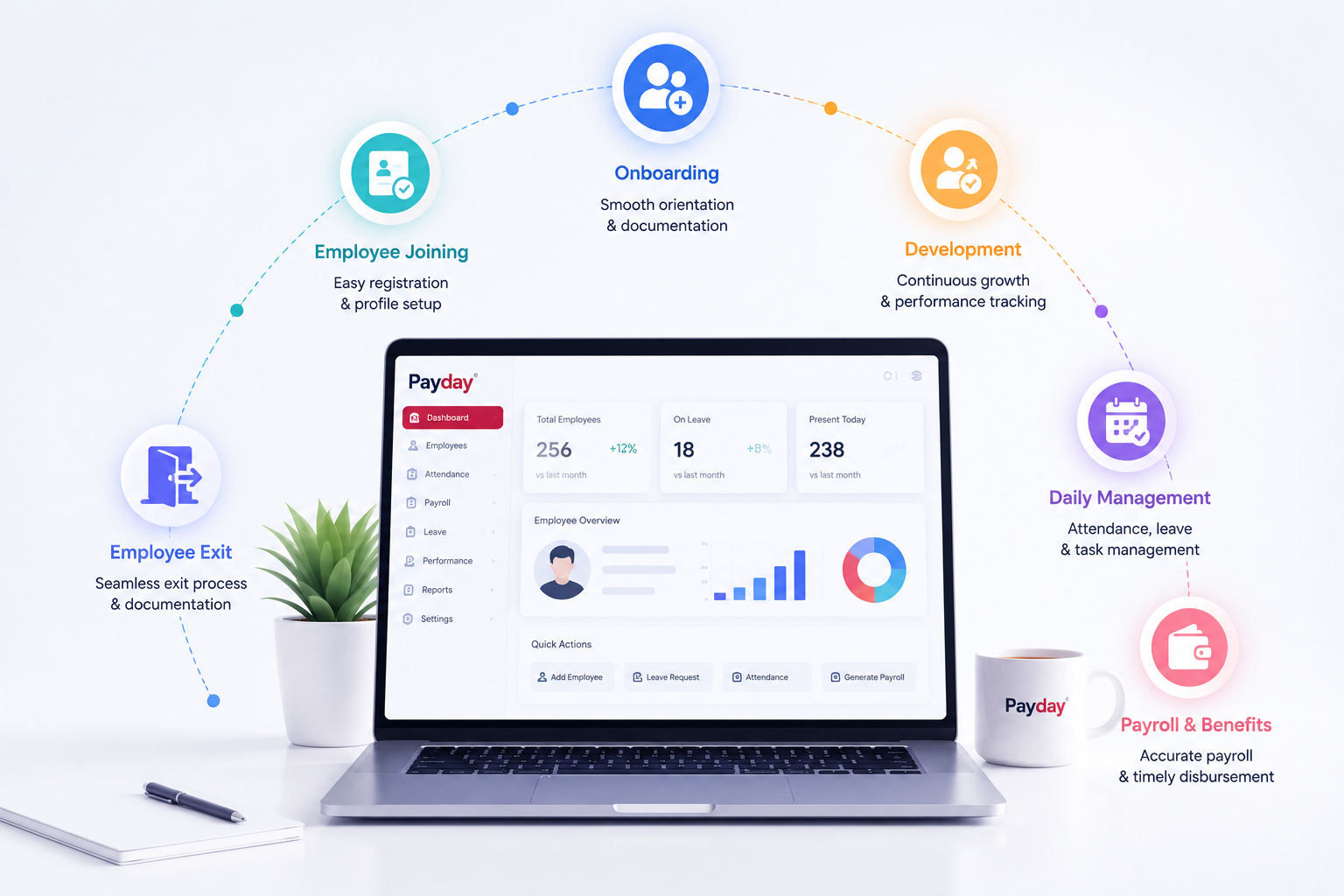
How HRMS Connects the Employee Lifecycle
The real value of an HRMS is the connection between different HR processes.
A typical workflow can look like:
Recruitment
↓
Self-Onboarding
↓
Employee Management
↓
Attendance
↓
Leave
↓
Payroll
↓
Letters & Documents
↓
Reports
↓
Offboarding
For example:
Attendance + Leave → Payroll
Onboarding → Employee Records
Employee Records → Letters & ID Cards
Employee Management → Offboarding
This connected approach can reduce duplicate data entry and make HR administration more organized.
Key Benefits of HRMS Software
Centralized Employee Information
HR teams can maintain employee records in a centralized digital environment.
Reduced Manual Work
Digital workflows can reduce repetitive administrative tasks.
Better Data Consistency
Connected processes help HR teams work with more consistent employee information.
Improved Payroll Coordination
Relevant attendance and leave information can support payroll processing.
Easier Reporting
HR teams can access workforce information through reports.
Better Employee Experience
Digital onboarding, leave, attendance, and other processes can make HR interactions more convenient.
Scalable HR Management
A centralized HRMS can support businesses as their workforce grows.
How PAYDAY Supports the Complete Employee Lifecycle
PAYDAY brings multiple HR processes together, including:
- Recruitment Management
- Self-Onboarding
- Employee Management
- Attendance Management
- Leave Management
- Payroll Management
- Letter Management
- ID Card Management
- GIS Tracking
- Multi-Location Mapping
- Reports
- Offboarding
This allows businesses to manage employees through a connected HR environment rather than relying on separate tools for every stage.
Frequently Asked Questions
What is HRMS software?
HRMS software is a digital system that helps organizations manage employee information and HR processes such as recruitment, onboarding, attendance, leave, payroll, documentation, and offboarding.
What is employee lifecycle management?
Employee lifecycle management involves managing the different stages of an employee's relationship with an organization, from recruitment and joining through employment and eventual exit.
How does HRMS software help HR teams?
HRMS software centralizes employee information and connects different HR processes, helping HR teams reduce manual administration and manage employee-related activities more efficiently.
Can HRMS connect attendance, leave and payroll?
Yes. An integrated HRMS can connect relevant attendance and leave information with payroll workflows, reducing the need for repetitive manual data entry.
Can PAYDAY manage employee onboarding and offboarding?
Yes. PAYDAY supports Self-Onboarding and Offboarding, allowing organizations to manage both the beginning and end of the employee lifecycle within the HR environment.
Conclusion
The employee lifecycle involves many connected HR activities. From recruitment and onboarding to employee management, attendance, leave, payroll, documentation, reporting, and offboarding, HR teams need organized processes and accurate information.
Managing these activities through separate spreadsheets and manual systems can become increasingly difficult as a business grows.
HRMS software provides a centralized approach to managing the complete employee lifecycle.
PAYDAY HRMS connects Recruitment, Self-Onboarding, Employee Management, Attendance, Leave, Payroll, Letter Management, ID Cards, GIS Tracking, Multi-Location Mapping, Reports, and Offboarding in one HR environment.
For growing businesses, this connected approach can help HR teams manage employees more systematically—from joining to exit.
Manage the Complete Employee Lifecycle with PAYDAY HRMS
Connect your HR processes, employee records, attendance, leave and payroll in one platform.
You have not enough Humanizer words left. Upgrade your Surfer plan.